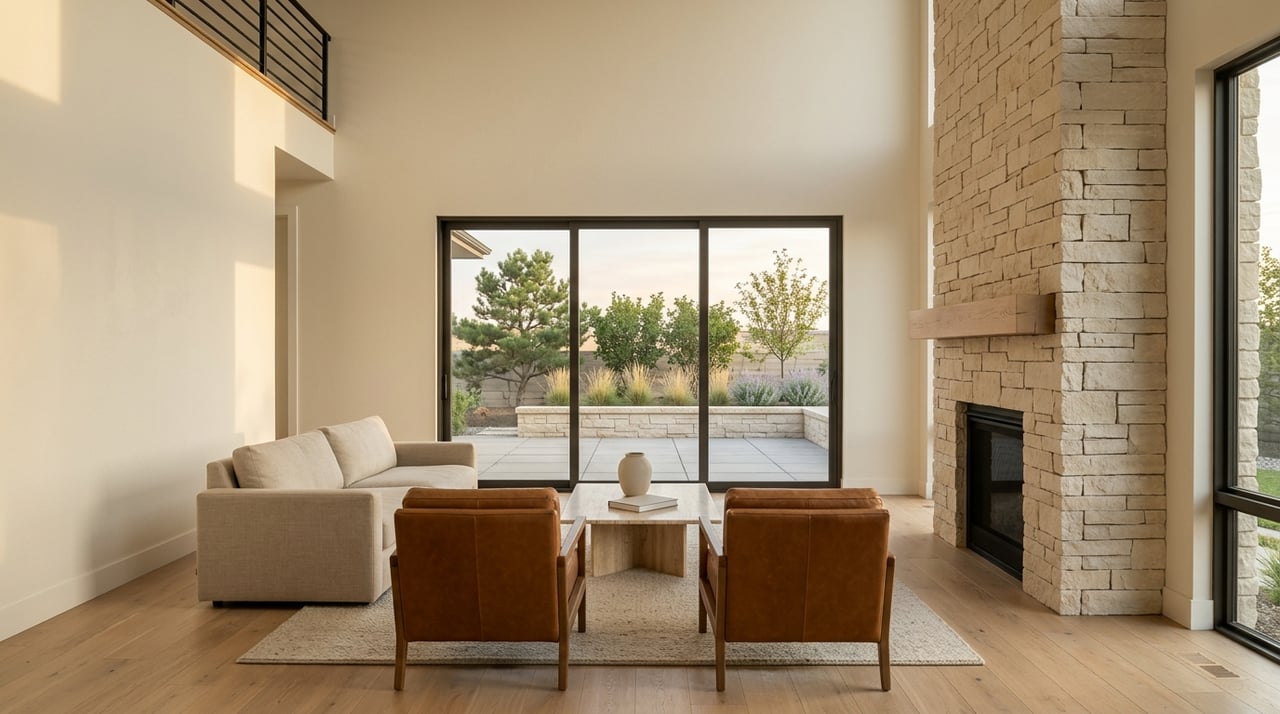
How to Sell a Custom Home in Alpine With a Design-Led Plan
May 14, 2026
May 14, 2026
Wondering why some Alpine custom homes capture attention right away while others sit far longer than expected? If you are selling a one-of-a-kind property here, you are not just bringing square footage to market. You are presenting a design, a site, and a lifestyle story that buyers need help understanding. This guide will show you how a design-led strategy can help your Alpine home stand out and connect with the right buyer. Let’s dive in.
Alpine is not a high-turnover market built on quick, interchangeable sales. The city’s 2024 population was estimated at 10,548, with a median household income of $168,929, an owner-occupied housing rate of 87.6%, and a median owner-occupied home value of $893,400. Those numbers point to a community of long-term homeowners where property presentation matters.
The local planning framework adds another layer. Alpine’s general plan emphasizes preserving a small-town, rural atmosphere, open space, and mountain surroundings. It also supports low-density development and protection of mountain and valley views, which means your home is being judged not only as a structure, but as part of a larger landscape.
That matters when you sell. In Alpine, buyers are often evaluating how a home fits the parcel, how it captures privacy, and how it relates to the land around it. A design-led strategy helps turn those details into a clear and compelling reason to buy.
A custom home in Alpine should be marketed as a site-specific property. The city’s building guidance says homes should be designed to fit a specific site, and it notes that engineered site plans may be required where slopes, grade, drainage, setbacks, or easements are involved. That tells you something important about buyer expectations in this market.
When buyers look at a custom home here, they are often asking silent questions. Does the house sit well on the lot? Was the grade handled thoughtfully? Do the retaining walls, drainage, and orientation feel intentional? If your marketing does not answer those questions, buyers may fill in the blanks with doubt.
This is why the site story deserves equal weight with the interior finish story. A beautiful kitchen matters, but so do the view lines from the great room, the usability of the yard, the privacy of the outdoor spaces, and the way the home meets the terrain.
In Alpine, public pricing data suggests a premium market with limited turnover and a broad spread of property types. Redfin reported a median sale price of $1.42 million in March 2026, while Zillow showed a typical home value of $1,172,442 and a median list price of $2,126,167. Those are different measures, but together they show why broad market averages are not enough for a custom home.
Buyers are usually comparing details such as:
That is why design-led selling is so effective. It helps buyers understand value on the terms that matter most in Alpine.
In many places, views are treated like a bonus. In Alpine, they should be treated like primary inventory. City planning materials have repeatedly emphasized the importance of scenic resources, including mountain, ridgeline, hillside, and Utah Lake views, as contributors to community character and desirability.
If your property has meaningful views, they should shape the entire listing strategy. That starts with identifying where the best view experiences actually happen. Sometimes that is the main living area, but it could also be the primary suite, a covered patio, a balcony, or the arrival sequence as you approach the home.
Once you know the strongest view moments, your marketing should highlight them consistently. The goal is not just to say the home has views. The goal is to show how the home was designed to live with them.
A strong listing strategy often includes:
For a custom home, that visual explanation is often essential. Buyers cannot fully understand a view-oriented property from a basic floor plan or feature list alone.
One of the biggest challenges in selling a custom home is helping buyers read the rooms correctly. Large spaces can feel empty if they are under-furnished. Unusual layouts can feel confusing if furniture placement does not define purpose. In a market like Alpine, that confusion can weaken the whole value story.
Staging works best when it gives each space a clear job while keeping sightlines open. That is especially important when the home’s appeal depends on indoor-outdoor flow, windows, patios, or landscape features. The furniture should support the architecture, not compete with it.
For example, a large great room should feel generous but grounded. A flex room should show a believable use, such as an office, guest space, or reading lounge. Outdoor areas should read as functional living spaces, not empty square footage.
Thoughtful staging can help buyers understand:
In Alpine, where many households are established and looking for functional luxury, that kind of clarity matters. The local demographic profile suggests buyers may respond well to practical features such as flexible offices, guest accommodations, storage, and outdoor living that feels usable across seasons.
Pricing is one of the easiest places to lose momentum. In a niche market, it is tempting to anchor to a headline number, but Alpine’s public data shows why that can be risky. The gap between sale prices, home value estimates, and list prices suggests a market with real segmentation.
That means your home should not be priced against Alpine as a whole in a simplistic way. It should be priced against the most relevant peers based on function, site, finish, and overall buyer experience. A custom home with a superior lot, stronger views, or better site integration may justify a very different position than the area median suggests.
Buyers at this level tend to notice when pricing feels generic. If the asking price does not line up with the home’s actual competitive set, you may attract the wrong traffic, miss early momentum, or spend too long chasing the market.
Before setting a list price, it helps to ask:
That level of pricing discipline is especially important in Alpine, where Redfin reported a median 269 days on market for March 2026, even though some homes went pending in around 34 days. The takeaway is simple: standout homes can move, but the broader market can still require patience.
Alpine City’s FY2026 budget says new homes continue to be built at a slow pace. The city reported 22 new homes built in calendar year 2024 and 27 new home building permits issued through May 2025, with only 8 of those permits issued in calendar year 2025. That points to constrained supply, which can support seller opportunity.
Still, scarcity alone does not sell a custom home. Limited inventory helps only when buyers can quickly understand why your property deserves attention. In a thin market, the homes that rise to the top are often the ones with the clearest story, strongest visuals, and most disciplined pricing.
This is where a boutique, design-minded approach can make a real difference. Instead of marketing your home like a standard suburban listing, you position it as a carefully considered property with a specific place in the Alpine market.
Custom homes are rarely sold by bedroom count alone. Buyers want to understand why the home was designed the way it was and how that design improves everyday living. That story becomes even more persuasive in Alpine, where site fit and landscape relationship carry extra weight.
A strong narrative can explain details such as the view axis from key rooms, the separation between gathering areas and quiet areas, or how outdoor spaces function throughout the year. It can also highlight the planning behind difficult lots, grade changes, drainage solutions, or retaining walls when those features are part of the property’s design success.
The point is not to overwhelm buyers with technical language. The point is to translate design and engineering decisions into everyday benefits they can feel. When that happens, the home becomes easier to value and easier to remember.
If you are preparing to sell a custom home in Alpine, a design-led strategy usually works best when it includes these steps:
Selling a custom home in Alpine is not about making the property look generic. It is about revealing what makes it distinct, useful, and hard to replace.
If you want help positioning your Alpine home with design-minded preparation, premium media, and a story that reflects how the property truly lives, Tyson Leavitt Real Estate offers a high-touch approach built for thoughtful sellers.
Stay up to date on the latest real estate trends.
Whether you’re just beginning your search or preparing for your next move, the Tyson Leavitt Group is here to guide you with expertise, integrity, and exceptional service. With deep-rooted knowledge of the Salt Lake Valley and surrounding areas, we’re ready to help you navigate every step of the journey with confidence and clarity. Explore the site, then reach out—we’d love to hear from you.
Tyson Leavitt Group | Cannon & Company
Tyson Leavitt
9089 S 1300 W, #130 West Jordan, UT 84088