Wondering exactly what Daybreak HOA fees include? If you love the idea of lake access, trails, and year-round community events, it helps to know how the associations work and what you get for your money. This guide breaks down Daybreak’s layered HOA structure, what fees typically cover, why dues vary, and how to compare homes with confidence. Let’s dive in.
How Daybreak HOAs are structured
Daybreak uses a layered HOA model. Most homes are part of the master association and may also belong to a village or building-level association. Understanding which associations apply to a property is the first step in estimating total dues.
- Master association: Oversees communitywide amenities and standards for all of Daybreak.
- Village or sub-association: Manages neighborhood-level amenities, landscaping, and rules.
- Building-level association (condos/townhomes): Often covers exterior maintenance and structural insurance for the building.
What HOA fees typically include
Daybreak assessments fund ongoing operations, upkeep, and long-term reserves. Coverage is split between the master association and the applicable sub-association for your home.
Communitywide coverage (master association)
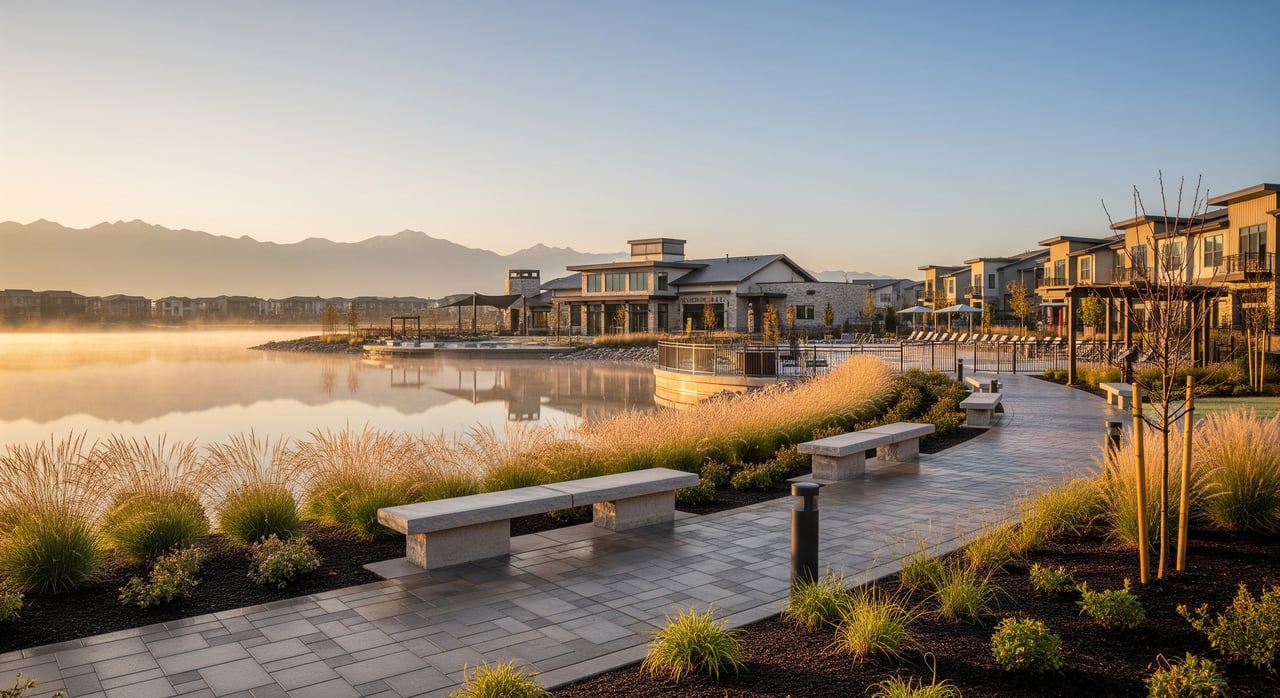
- Oquirrh Lake access, shoreline and harbor areas, and lake maintenance
- Trail network maintenance and large community parks
- Recreation facilities such as fitness centers, pools, splash pads, and sports courts
- Community programming and communications, including markets, concerts, and holiday events
- Administrative costs like management, legal, accounting, and liability insurance
- Contributions to reserve funds for major capital repairs and replacements
Village and building coverage (sub-associations)
- Neighborhood parks, medians, and common-area landscaping
- Irrigation, lighting, and utilities for common areas
- Signage, seasonal lighting, and security for shared spaces
- Enforcement and architectural review for village-level rules
- For many condos and townhomes: exterior building maintenance, roof and siding repairs, structural insurance, and private street upkeep (where applicable)
- In some neighborhoods: front-yard care or snow removal (confirm at the village level)
What fees rarely include
- Individual homeowner utilities
- Homeowner hazard insurance for single-family dwellings
- Municipal trash and recycling collection (typically handled by the city)
- Optional amenities that charge separate user fees, such as special classes or facility rentals
Why fees vary by village and home type
Not all Daybreak dues are the same. Several factors drive differences between properties and associations.
- Number of associations: A home may pay the master fee plus a village fee. Some condos and townhomes also have a building-level assessment.
- Housing type and maintenance: Condo and townhome dues are often higher because they include exterior building upkeep and structural insurance.
- Amenity mix: Villages with pools, private parks, or added services often have higher dues.
- Age and reserves: Older associations or those with lower reserves may charge more or levy special assessments to fund capital needs.
- Assessment formula: CC&Rs define how costs are allocated, whether per unit, per lot, or by ownership percentage.
- Operating costs: Inflation in labor, utilities, and materials can raise annual budgets.
How to compare homes in Daybreak
Create an apples-to-apples view of total HOA obligations and coverage. Before you write an offer, gather the current documents for every association tied to the property.
Documents to request
- Current operating budget and the most recent year’s financials
- Latest reserve study and current reserve balance
- CC&Rs, bylaws, and rules for both the master and the village or building association
- Board meeting minutes from the past 12 to 24 months
- Association insurance certificate and coverage summary
- List of planned capital projects and any active special assessments
- Assessment billing and collection policy, transfer and late fee schedules
- Management company contact information
Questions to ask
- Which associations apply to this home, and what are the current dues for each?
- What exactly do those dues cover for this housing type?
- Are fee increases or special assessments planned? What is the reason and timeline?
- How healthy are the reserves compared with the reserve study’s recommendations?
- Has the association been involved in litigation in the past five years?
- What are the rental and lease policies, including any short-term rental rules?
- How are guest parking, lake access, and amenity rules enforced?
Daybreak vs. other Salt Lake options
Daybreak stands out for its high-amenity lifestyle. The lake, extensive trails, parks, and coordinated programming are a big reason many buyers accept HOA fees as part of the value. Planned, walkable design and consistent architectural standards are also central to the community experience.
If you want low exterior maintenance and strong on-site amenities, a condo or townhome with comprehensive building coverage might fit well. If you prefer more control over your property and lower association involvement, a single-family home within Daybreak’s framework can strike a balance between amenities and autonomy, though you will still follow community standards. If you want no HOA at all, you will likely compare Daybreak with older Salt Lake neighborhoods that operate without associations, understanding the tradeoff in amenity access and community programming.
Smart budgeting and planning
Approach HOA dues like any other recurring cost in your housing budget. Review reserve studies and minutes to spot potential special assessments or upcoming projects. Ask how dues have changed over the past few years and why. Healthy reserves and clear planning are signs of a well-run association.
When you shortlist properties, compare total dues for all applicable associations, then weigh them against the amenity access and maintenance coverage you receive. A higher monthly assessment can pencil out if it replaces individual costs you would otherwise pay for exterior maintenance, private streets, or facility access.
Final thoughts
Daybreak’s layered HOA model funds the lake, trails, parks, events, and design standards that define the community. Your actual coverage and dues depend on the property’s associations, housing type, and the village-level amenity mix. With the right documents in hand, you can see exactly what you are paying for and choose the fit that matches your lifestyle and budget.
If you want help reviewing HOA documents, comparing villages, or aligning dues with your long-term plan, connect with the local team that treats your move like a curated experience. Reach out to Tyson Leavitt Real Estate to start a thoughtful, step-by-step search in Daybreak.
FAQs
What do Daybreak HOA fees typically cover for single-family homes?
- Usually master amenities like Oquirrh Lake, trails, large parks, and community programming, plus village-level landscaping and common areas. Exterior home maintenance is typically the owner’s responsibility.
How do condo and townhome dues differ in Daybreak?
- They are often higher because they may include exterior building maintenance, structural insurance, and private street upkeep in addition to master amenities.
Can Daybreak HOA fees increase after I buy?
- Yes. Boards can raise assessments within CC&R limits and may levy special assessments for capital needs. Review budgets, reserve studies, and meeting minutes for indicators.
Do HOA fees cover my homeowner insurance or utilities in Daybreak?
- Usually no. Single-family owners carry their own hazard insurance and pay their utilities. Some condo and townhome associations cover exterior building insurance only.
Is Oquirrh Lake access included for every owner in Daybreak?
- Access is governed by the master association’s rules and policies. Review the applicable documents to understand pass rules, guest policies, and any differences by product type.
Where can I find the exact current dues for a Daybreak home?
- Request the association budgets and disclosures from the listing agent and the management company, and review the estoppel certificate at closing for the most current amounts.